IUD Removal: Care Instructions
Overview
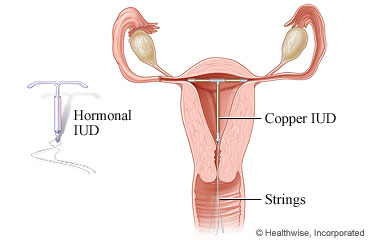
The intrauterine device (IUD) is a method of birth control. It is a small, plastic, T-shaped device that
contains copper or hormones. It is placed in your uterus. You may have had your IUD removed because you want
to become pregnant. Or maybe it caused pain, bleeding, or an infection. You may have chosen another method of
birth control. If you don't want to get pregnant, make sure to use another form of birth control now that your
IUD is not in place. Talk to your doctor about other forms of birth control.
Follow-up care is a key part of your treatment and safety. Be sure to make and go to all
appointments, and call your doctor if you are having problems. It's also a good idea to know your test results
and keep a list of the medicines you take.
How can you care for yourself at home?
-
Once the IUD is taken out, you can become pregnant. If you want to become pregnant, you can start trying
to have a baby as soon as you like. If you don't want to get pregnant, talk with your doctor about birth
control options.
-
If your doctor prescribed antibiotics because of an infection, take them as directed. Do not stop taking
them just because you feel better. You need to take the full course of antibiotics.
When should you call for help?
 Call your
doctor now or seek immediate medical care if:
Call your
doctor now or seek immediate medical care if:
Watch closely for changes in your health, and be sure to contact your doctor if you have
any problems.
Current as of: November 27, 2023
Content Version: 14.0
Care instructions adapted under license by your
healthcare professional. If you have questions about a medical condition or this instruction, always ask
your healthcare professional. Healthwise, Incorporated disclaims any warranty or liability for your use of
this information.